Big Tech AI Race: Opportunity or Financial Risk?
The tech world is changing fast due to the Big Tech AI Race. Major companies are pouring billions of dollars into artificial intelligence systems. Microsoft, Google, Amazon, and Meta lead this massive push.
Investors now wonder if this huge spending is a great strategic choice. Others fear it might create a market bubble. This complete guide breaks down the true financial facts for you.
In 2026, tech leaders will spend over $745 billion on new hardware. They are building huge data centers and buying millions of powerful chips. Every business owner and software developer needs to understand these major changes.
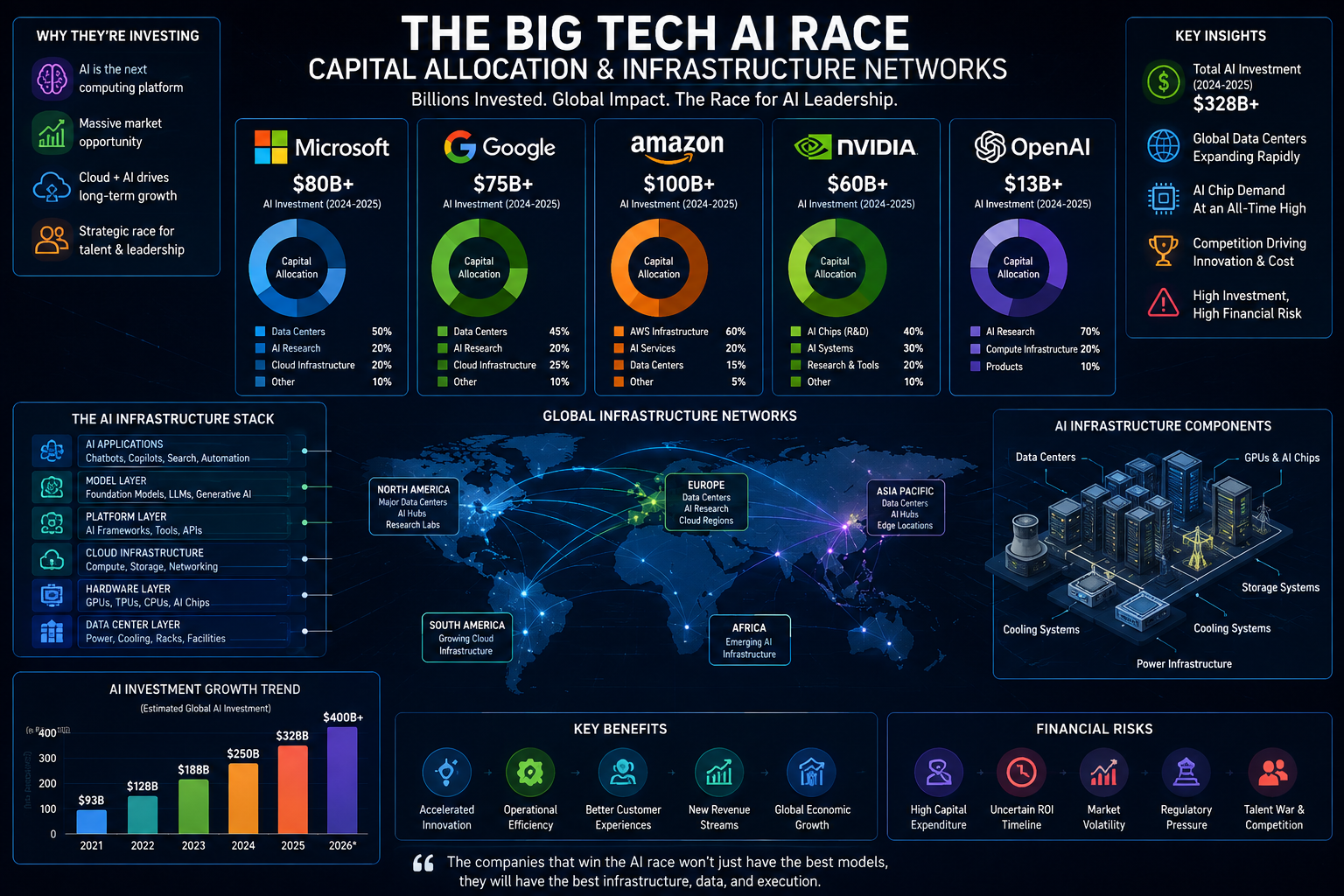
Image Alt Text: Big Tech AI Race visualization showing capital allocation and infrastructure networks.
What Is Happening in the Big Tech AI Race?
Tech companies are spending cash at a record pace today. In past years, cloud upgrades took over a decade to complete. Now, artificial intelligence upgrades are happening in just three short years.
Recent market reports show clear spending numbers for 2026. Microsoft, Amazon, Google, and Meta will spend $745 billion this year. That is a 77% increase compared to their 2025 budgets.
Where is all this money going? Here are the main areas receiving major investment funds:
- AI Computer Chips: Buying high-end Nvidia chips and custom processor hardware.
- Data Center Tech: Building large facilities with advanced liquid cooling systems.
- Power Facilities: Securing long-term clean energy, nuclear power, and electric grids.
- Custom Microchips: Designing in-house chips to reduce overall long-term hardware costs.
- High-Speed Networks: Upgrading fiber cables to move data across clouds rapidly.
Why Are Tech Giants Spending Billions on AI?
Executive teams are risking their short-term profits for one main reason. They want to control the next major digital platform. In technology, platform owners always make the most money over time.
Microsoft won the personal computer era with Windows. Apple and Google won the mobile phone era with app stores. Now, artificial intelligence is becoming the main layer for all software apps.
"Falling behind in AI tech is far more dangerous than spending too much money today. Extra server power can always be reused later for other business needs."
Three big drivers explain this aggressive spending strategy:
- Market Leadership: Larger computer clusters allow companies to train smarter models faster.
- Cloud Lock-In: Businesses want fast AI tools, so they sign long cloud contracts with hyperscalers.
- Protecting Core Products: Tech leaders must upgrade search engines, online stores, and social feeds to stay ahead.
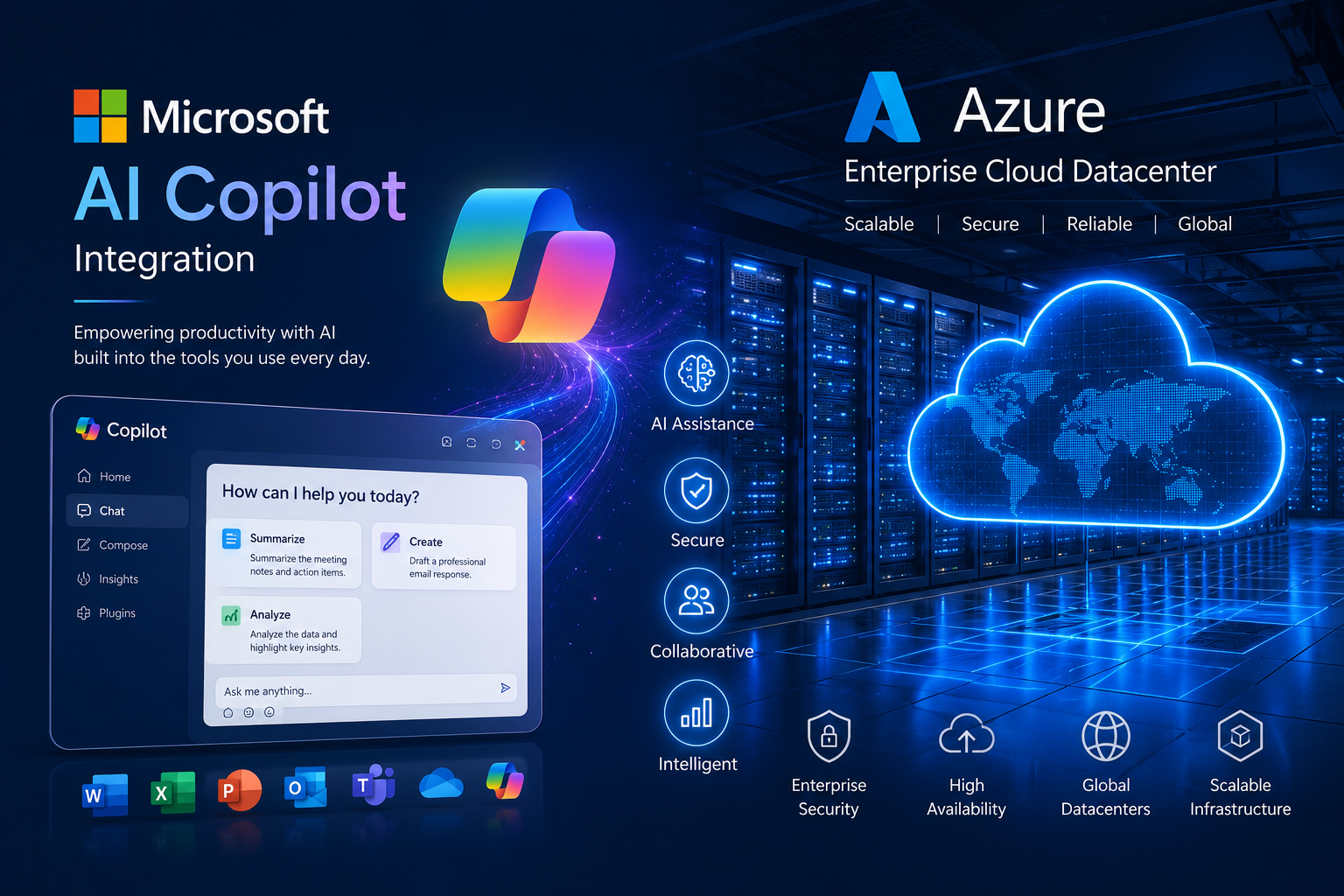
Image Alt Text: Microsoft AI Copilot integration and Azure enterprise cloud datacenter.
Investor Sentiment: Is Wall Street Excited or Worried?
Wall Street traders have mixed feelings about current tech budgets. Some analysts love the fast revenue growth in cloud services. Other investors worry about falling cash reserves and rising costs.
Why Investors Are Excited
Cloud revenues are growing at impressive rates. Azure, AWS, and Google Cloud report major gains from AI tasks. Businesses pay good subscription rates for helper tools like Copilot and Gemini.
Internal software teams also work much faster now. Developers use intelligent coding tools to finish projects early. Major reports from McKinsey and Gartner show huge economic value ahead.
Why Investors Are Worried
Huge capital spending reduces free cash flow for stock buybacks. Hardware also loses value fast as newer chips appear every year.
Building data centers takes time, so profits can take years to arrive. Some investors fear current stock prices are higher than actual corporate earnings justify.
How Microsoft, Google, Amazon, and Nvidia Compete in the Big Tech AI Race
Each major tech company uses a unique plan to win users. Let us look at how the top players spend their money in this ongoing competition.
Microsoft: Deep Integration and Enterprise Tools
Microsoft teamed up early with OpenAI to lead the enterprise market. They built intelligent tools into Word, Excel, GitHub, and Azure Cloud. Their 2026 budget is reaching $190 billion to handle growing business demand.
Google: Full Control From Chips to Apps
Google controls its entire technical supply chain. They build custom TPU chips, create Gemini models, and run Google Search. Their 2026 budget ranges between $175 billion and $185 billion.
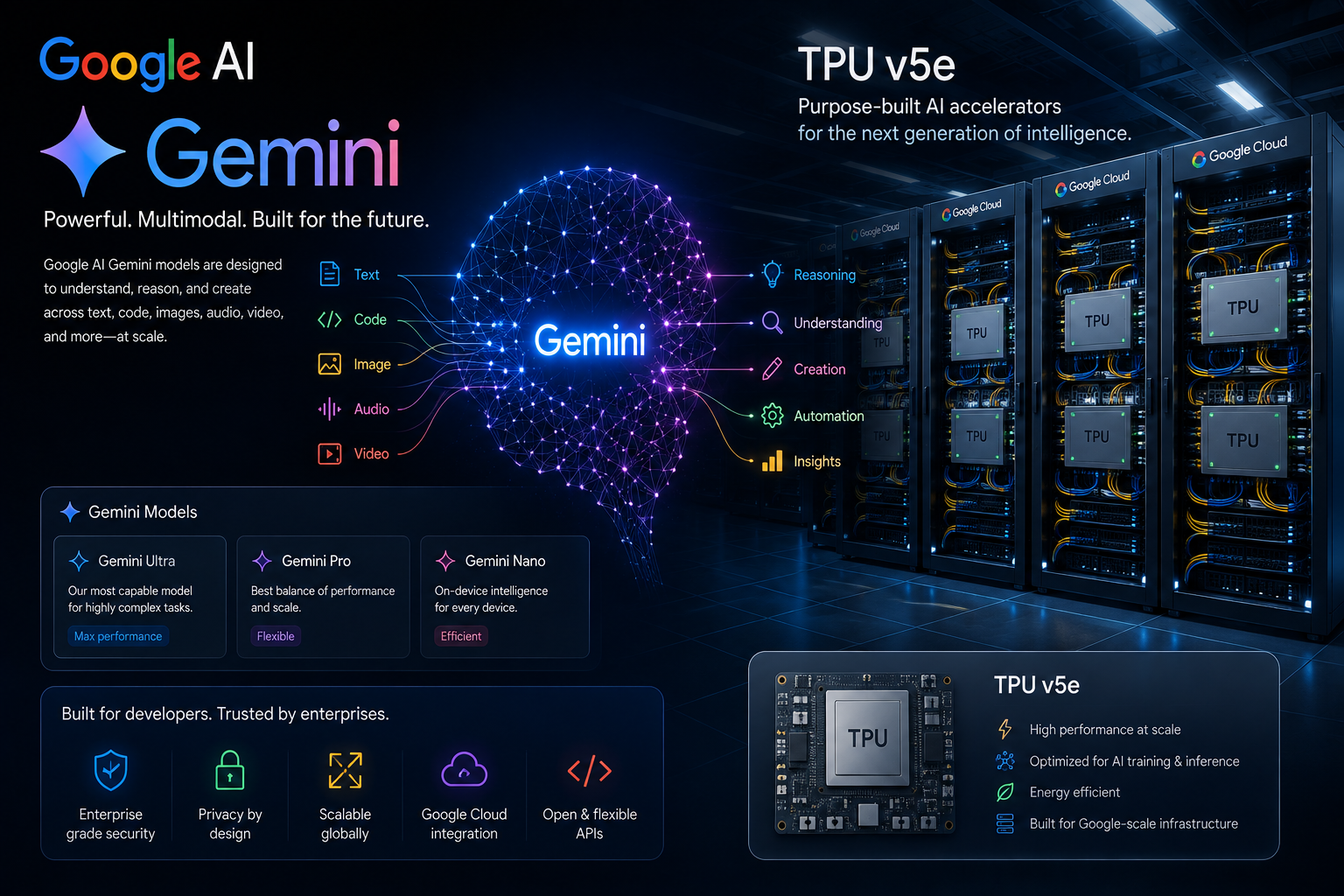
Image Alt Text: Google AI Gemini neural network visualization and TPU hardware server racks.
Amazon AWS: Cloud Power and Flexible Choice
Amazon AWS offers flexible options for corporate clients. Their Bedrock service lets users pick models from Claude, Meta, or Titan. Amazon is spending nearly $200 billion in 2026 on servers and custom Trainium chips.
Nvidia: The Hardware Leader
Nvidia supplies the main processor chips for almost every AI team. Their H100 and Blackwell chips dominate the global market today. They receive nearly half of all tech giant infrastructure spending.
OpenAI: The Innovator Driving Fast Change
OpenAI continues to launch smart reasoning models rapidly. Their constant releases force every major cloud company to spend more on faster computer hardware.
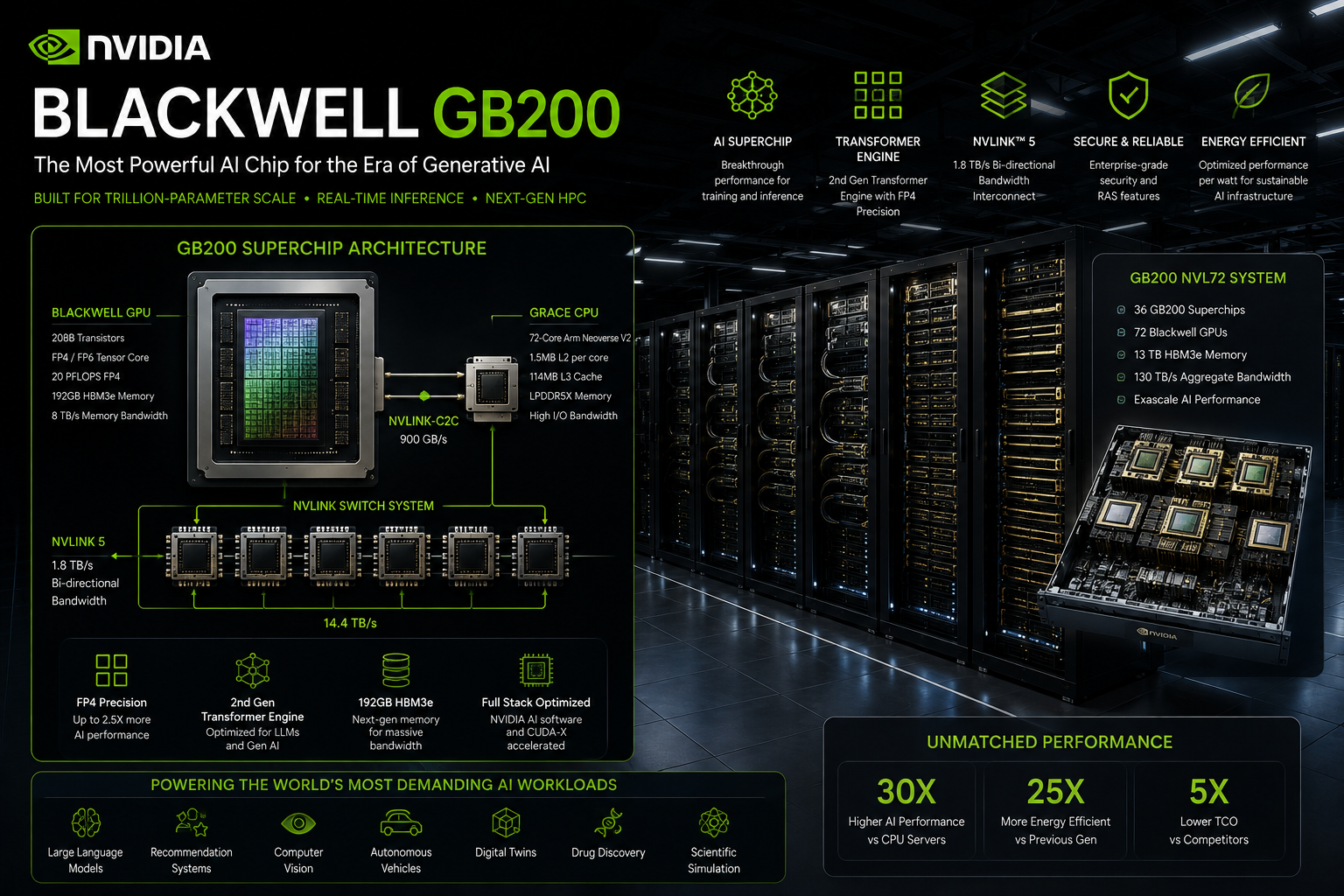
Image Alt Text: Nvidia Blackwell GB200 AI chip architecture powering modern datacenter server hardware.
Impact on Businesses, Startups, and Developers
Heavy spending by tech giants creates new advantages for everyday businesses. You can access world-class tools at lower costs today. Here is how key groups benefit from this trend:
- Non-Tech Companies: Businesses can automate customer support and document work using affordable pre-built models. Learn more about modern Business Automation options.
- Software Products: Older software tools must add smart features or risk losing customers to modern AI apps. Explore specialized Custom Software Development to stay ahead.
- Startup Founders: Startups do not need to build expensive hardware anymore. They can use cheap model APIs to launch apps quickly. Check out our Mobile App Development solutions.
- Software Developers: Coding tools help engineers finish projects faster. Developers can focus on app design rather than writing basic code manually.
- Cloud Security Teams: Protecting customer data in cloud apps is more important than ever. Review our Cloud Services and AI Solutions for secure setup.
Financial and Tech Risks in the Big Tech AI Race
Despite bright opportunities, business leaders must manage clear financial risks. Investing without a plan can hurt your company budget. Consider these four primary risk factors:
- Cash Reserves Pressure: High spending cuts into profits. Stock values can fall if new revenues arrive slower than expected.
- Power Grid Shortages: Data centers need huge amounts of power. Local electric grids are running out of extra energy capacity.
- Long-Term Debt Commitments: Tech companies owe billions in future hardware and data center leases.
- New Government Rules: Strict data privacy laws increase compliance costs for businesses handling user data.
Transformative Market Opportunities for Every Industry
Companies using smart technology are seeing great business gains. You can improve team efficiency and cut daily expenses easily. Here is how modern fields are growing:
- Office Automation: Intelligent helpers process forms, sort emails, and file reports automatically.
- App Engineering: Smart software tools reduce product development times from months to weeks.
- Medical Care: Health software helps doctors check medical images and organize patient records faster.
- Banking Systems: Security software detects fraud in real time and protects user account balances.
- Online Retail: Smart shopping tools give personal product advice to buyers 24/7. Improve your digital storefront with expert UI/UX Design.
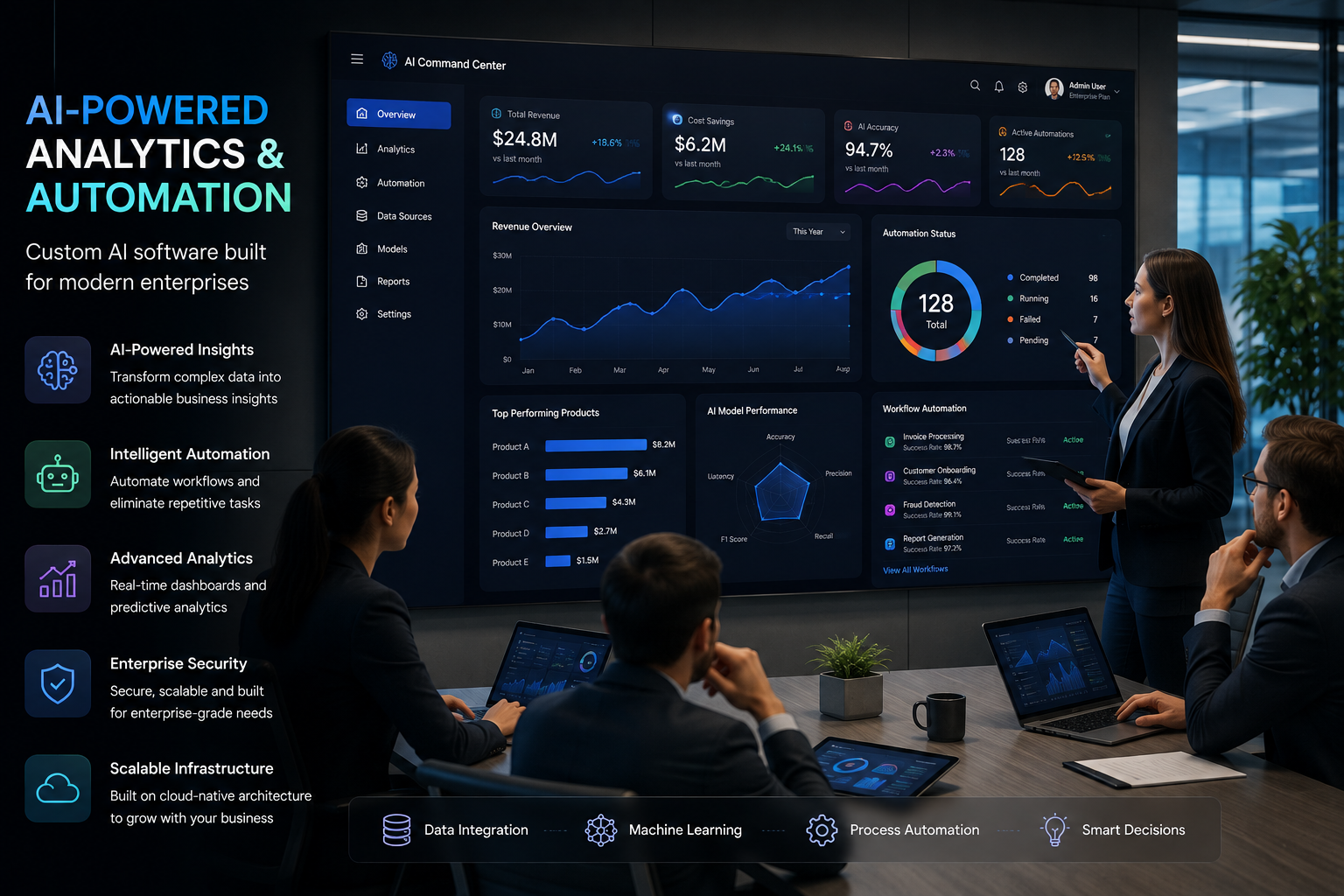
Image Alt Text: Enterprise business team using custom AI software dashboard for analytics and automation.
Comparing Tech Giant AI Spending Strategies
This simple table shows how the four main cloud leaders spend their capital budgets in 2026:
| Company | 2026 Budget | Main Strategy | Top Product Focus | Cloud Revenue Growth |
|---|---|---|---|---|
| Microsoft | ~$190 Billion | Enterprise Office Integration | Microsoft 365 Copilot, Azure | Azure +40% YoY |
| Amazon | ~$200 Billion | Custom Chips & Cloud Hosting | AWS Bedrock, Trainium Chips | AWS +37% YoY |
| $175–185 Billion | Full-Stack Apps & Search | Gemini AI, TPU Chips, Search | Google Cloud +82% YoY | |
| Meta | $115–135 Billion | Open Source & Ad Optimization | Llama Models, Ad Feeds | Ad Sales +27% YoY |
Action Steps for Business Leaders and CTOs
How can your company win in this changing tech market? Following a clear, sensible strategy keeps your operational costs low:
- Pick High-Value Tasks: Identify slow, manual work inside your company first. Focus on tasks where smart tools save real time.
- Use Flexible Software: Do not rely on just one AI model vendor. Build modular software so you can switch tools as prices change.
- Focus on Simple App Design: Make sure your staff can use new software tools easily without long training sessions.
- Protect Your Private Data: Keep client information safe. Never upload private data into public tools without enterprise protection.
- Build Mobile Tools: Give field workers access to intelligent tools on mobile phones for fast updates.
Conclusion: What Is the Future of the Big Tech AI Race?
The Big Tech AI Race brings both financial risks and amazing commercial opportunities. Major tech companies will continue to invest heavily in cloud infrastructure. Wall Street will watch quarterly earnings closely to ensure those investments pay off.
For standard businesses, this hardware spending wave is a huge advantage. Tech giants are funding the world's best computer infrastructure. You can now use these tools to make your business faster and smarter.
The real winners will be businesses that adopt smart software thoughtfully. Focus on fixing real customer needs, saving team time, and offering great mobile experiences today.
Key Takeaways
- Massive Investments: Tech giants are spending $745 billion on AI hardware in 2026.
- Targeted Purchases: Funds go directly to chips, data centers, green energy, and custom silicon.
- Market Pressure: Cloud profits are rising, but investors watch free cash flow carefully.
- Great Value for Businesses: Smaller companies get cheap access to powerful intelligent software tools.
- Smart Business Path: Success requires secure cloud connections, flexible software, and clear user designs.
Frequently Asked Questions (FAQ)
1. What is the Big Tech AI race?
The Big Tech AI race is a competition among tech giants like Microsoft, Google, Amazon, and Meta to build the best artificial intelligence models and cloud computer systems.
2. How much are tech companies spending on AI in 2026?
Major cloud companies are spending a total of $745 billion in 2026 to buy chips, build data centers, and secure power sources.
3. Is the Big Tech AI race creating a market bubble?
Cloud revenues are growing quickly, showing real user demand. However, high spending puts pressure on corporate cash reserves, so investors stay cautious.
4. Who leads the AI chip market today?
Nvidia is the market leader for AI hardware chips. Microsoft, Amazon, and Google lead in cloud software hosting services.
5. Why do tech giants build custom chips?
Custom chips lower long-term hardware expenses, reduce dependence on third-party suppliers, and reduce energy use in data centers.
6. How does this trend help small businesses?
Price competition among tech giants lowers API costs. Small businesses can use advanced tools for customer service and daily administration at low costs.
7. What are the main physical limits to AI growth?
The biggest physical limit is available electrical power for data centers, followed by chip production limits and local data privacy laws.
8. How can software companies stay competitive?
Software teams must add smart features to their apps, automate routine user tasks, and focus on clean, simple product designs.
9. Why is custom software development important for AI?
Custom software connects standard AI tools securely to private company databases without exposing sensitive client data to public platforms.
10. How does Vasuko App Solutions help companies adopt AI?
Vasuko App Solutions builds custom software, mobile apps, and cloud tools that help businesses adopt artificial intelligence safely and grow efficiently.